
Description
Improve Stock Control During Multi-Pass Molding
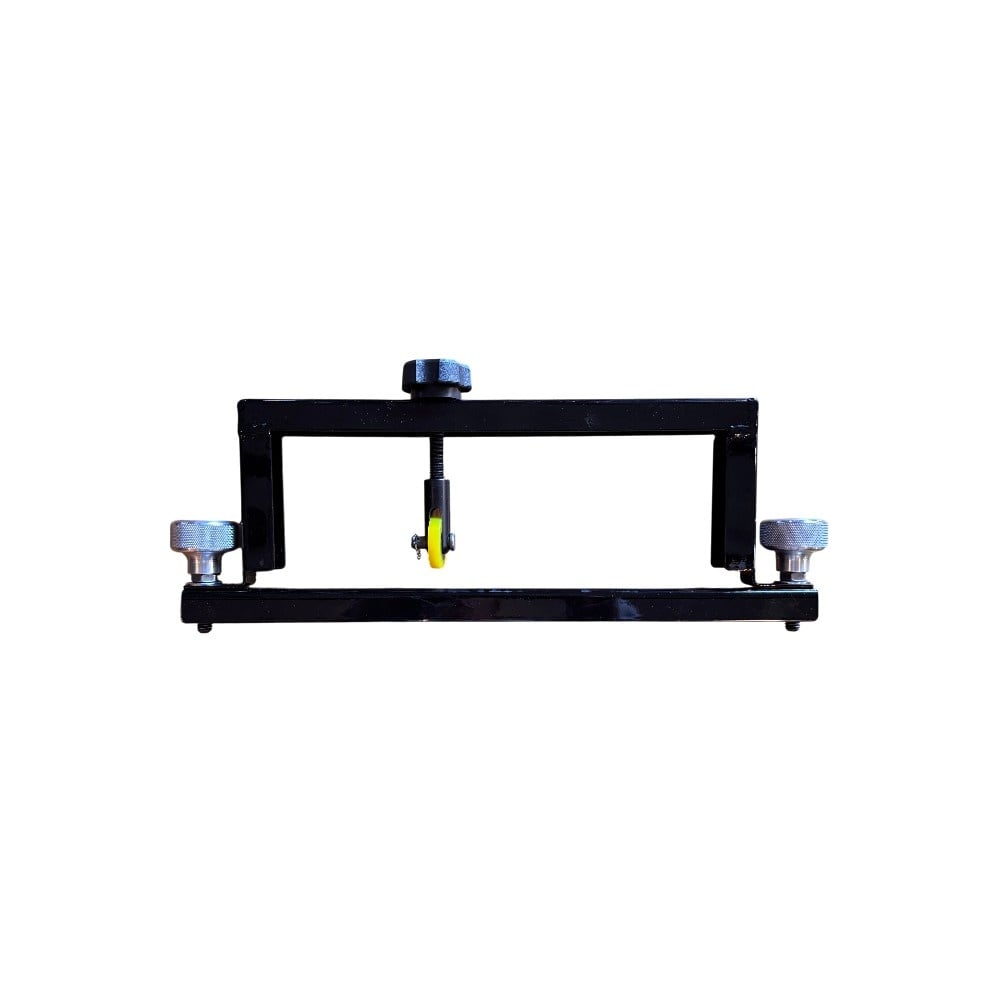
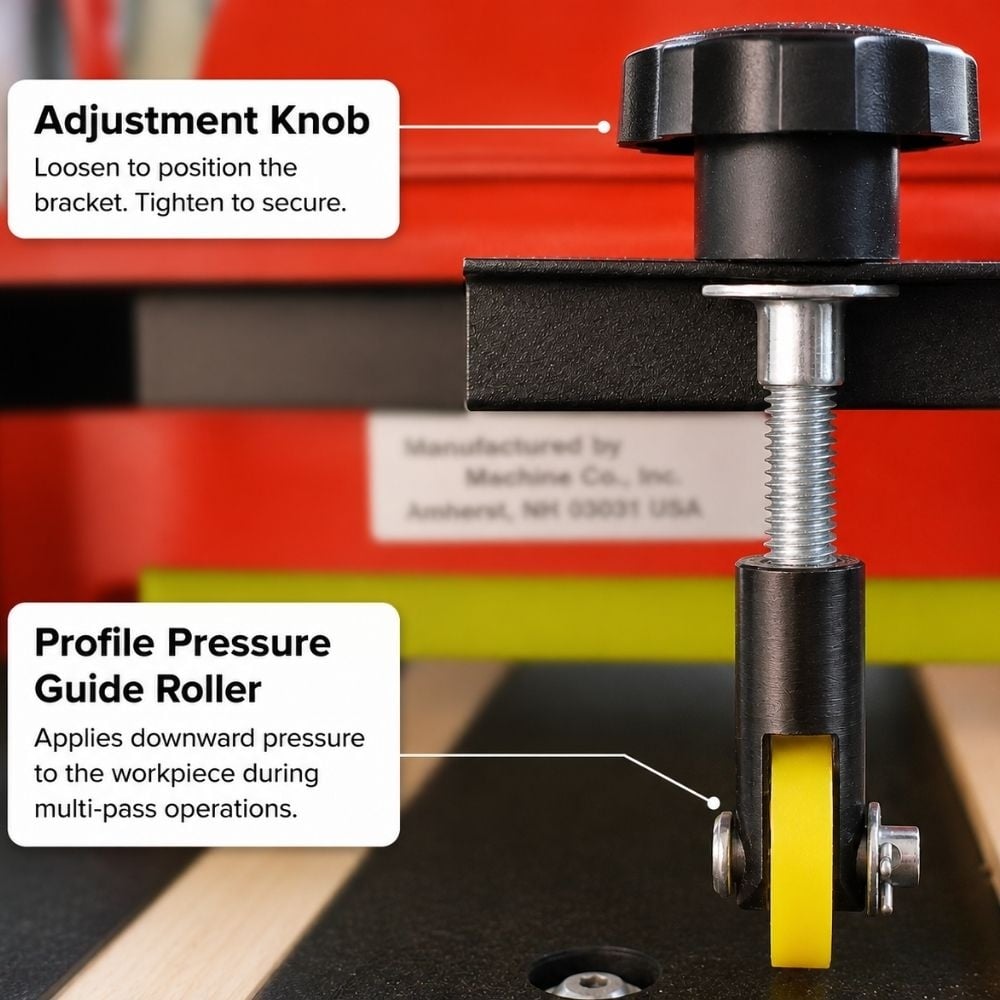
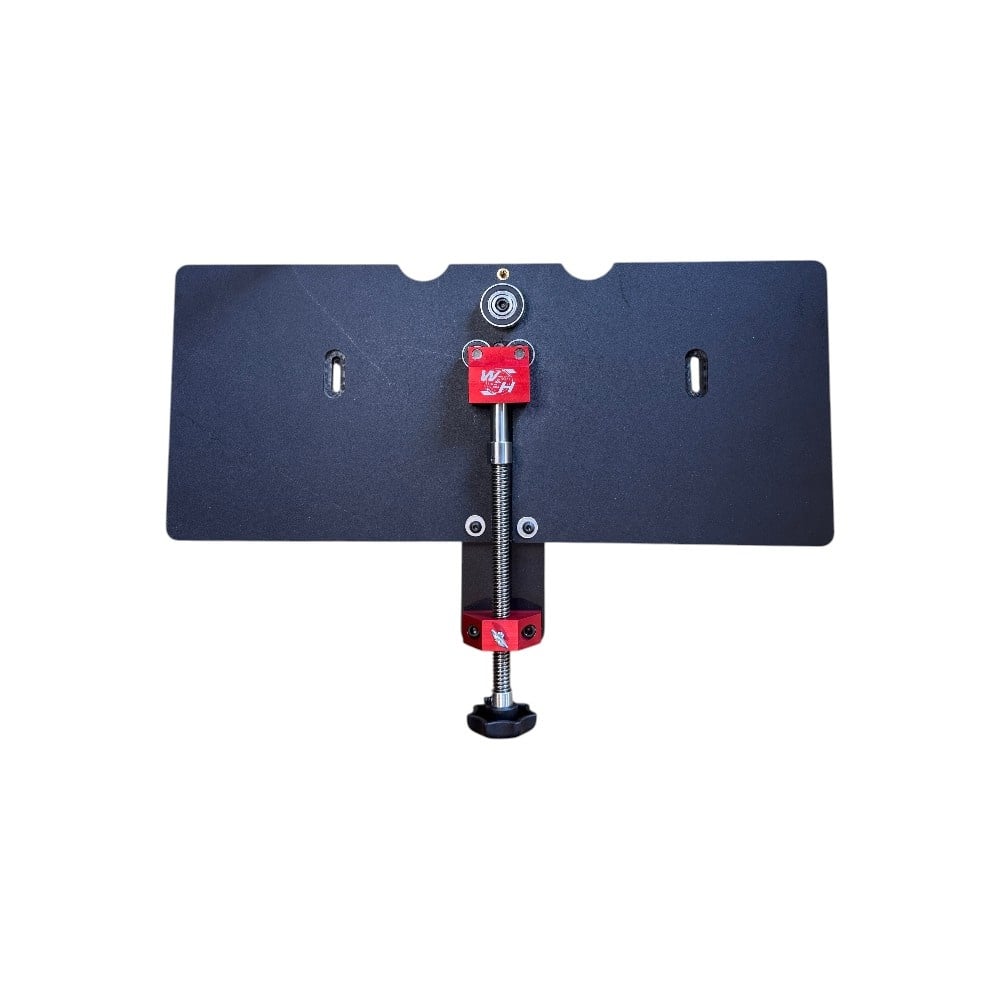
The Williams & Hussey Profile Pressure Guide is designed to provide additional downward pressure during multi-pass molding operations. Unlike flat hold-down devices that only contact the highest points of the workpiece, the PPG roller is adjusted to support the lowest portion of the molding profile as the profile develops with each machining pass.
The result is smoother feeding, reduced vibration, improved stock control, and more consistent molding quality throughout the machining process.
How the Profile Pressure Guide Works
During the first machining pass, the workpiece entering the machine is still flat, so an infeed Profile Pressure Guide is not required.
After the first pass, the workpiece contains a partial molding profile. Beginning with the second pass, the infeed and outfeed Profile Pressure Guides are adjusted to lightly contact the lowest portion of the molded profile, maintaining consistent downward pressure while the profile continues to develop.
As the cutterhead height changes during multi-pass machining, the Profile Pressure Guide is adjusted by the same increment to maintain proper support throughout the operation.
Benefits
- Improves feed consistency
- Improves stock control during multi-pass molding
- Reduces vibration and chatter
- Produces cleaner finished molding profiles
- Applies pressure to the lowest portion of the molding profile
- Ships fully assembled for quick installation
- Simple indexed roller adjustment
Ideal Applications
The Profile Pressure Guide is ideal when machining deep or complex molding profiles that require multiple passes. It provides additional support as the profile develops, helping maintain consistent feed and improve finished surface quality.
Common applications include:
- Casing molding
- Base molding
- Crown molding
- Panel molding
- Handrail profiles
- Other custom molding profiles machined using the Multi-Pass System
Standard Pressure Shoe vs. Profile Pressure Guide
Although both standard pressure shoes and Profile Pressure Guides apply downward pressure to the workpiece, they perform differently during multi-pass molding. As the molding profile develops, a standard flat pressure shoe contacts only the highest points of the workpiece, while a Profile Pressure Guide is adjusted to support the lowest portion of the molding profile.
The table below highlights the key differences.
| Feature | Standard Flat Pressure Shoe | Profile Pressure Guide |
|---|---|---|
| Contact Area | Applies pressure to the highest points of the workpiece | Applies pressure to the lowest portion of the molding profile |
| Support | Limited as the profile develops | Maintains support throughout multi-pass machining |
| Feed Consistency | Less support for deep or complex profiles | Improved control as the molding profile develops |
| Recommended For | Square or flat stock | Casings, base, crown, panel, handrail, and other multi-pass molding profiles |
Compatible Equipment
Designed for use with:
- Williams & Hussey Model 206 Molder
- Williams & Hussey Model 209 Molder
- Williams & Hussey Multi-Pass System
- Williams & Hussey Guide System
- ½” Sub-Plate
Machines equipped with custom sub-plates or alternate guide systems may require different mounting locations or roller height adjustments.
Ships Ready to Install
The Profile Pressure Guide ships fully assembled.
Installation is quick:
- Loosen the mounting knobs.
- Slide the guide onto the sub-plate.
- Tighten the mounting knobs.
- Adjust the roller height for the molding profile.
Ships fully with no assembly required.
Why Choose the Williams & Hussey Profile Pressure Guide?
The Williams & Hussey Profile Pressure Guide helps maintain consistent downward pressure on the lowest portion of the molding profile. This result is improved feed consistency, reduced vibration, and cleaner finished molding profiles throughout multi-pass machining.
Reviews
There are no reviews yet.