Beginner’s Guide to Running a Molder
Successfully running a molder requires more than simply turning on the machine. To achieve crisp, clean results with every pass, it’s important to focus on a few foundational steps: selecting the right tooling, setting up the machine correctly, preparing material properly, and maintaining consistent feeding and inspection practices.
This beginner’s guide walks through the essential elements of running a molder so you can produce high-quality trim, casing, and custom molding profiles with confidence.
Choosing the Right Profile Knife
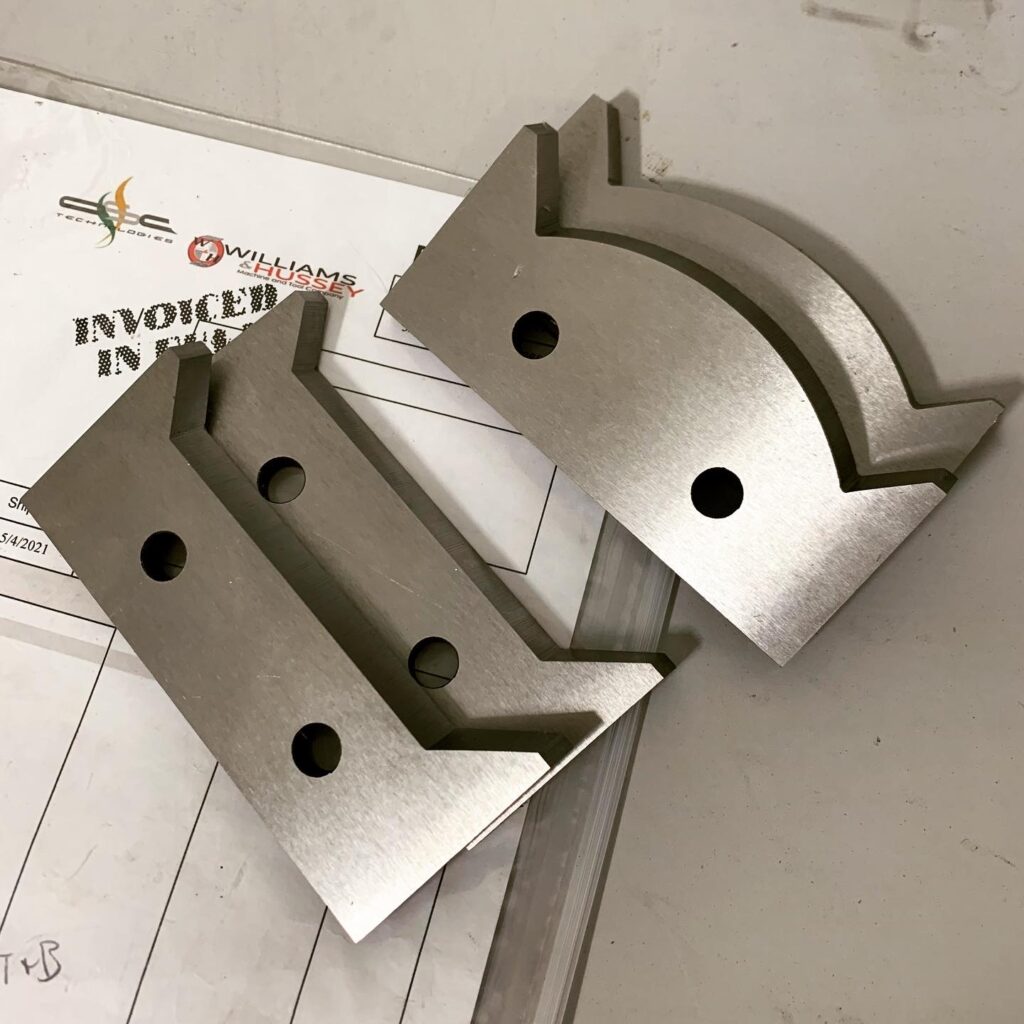
The profile knife is at the core of every successful molding operation. At Williams & Hussey, all profile knives are designed specifically to fit our molders for proper alignment, balance, and cutting performance.
Manufactured from M2 high-speed steel (HSS), these knives are built to:
- Maintain sharpness longer
- Withstand high operating temperatures
- Produce clean, consistent cuts across a wide range of wood species
When selecting a knife, match the profile to the molding shape you want to create and consider the type of wood you’re running. Hardwoods, softwoods, and figured woods all behave differently under the cutter, making sharp, well-matched knives essential.
A dull or mismatched knife can cause rough finishes, tear-out, vibration, or unnecessary strain on your machine. Always inspect knives before use and replace them when needed.
Williams & Hussey offers hundreds of standard profile knives, and custom knife design services are available when a standard profile doesn’t meet your needs.
Setting Up the Molder and Knife for Best Results
Accurate setup is key to getting clean, consistent results from your Williams & Hussey molder, and it starts with proper knife installation.
Install and Position the Profile Knife
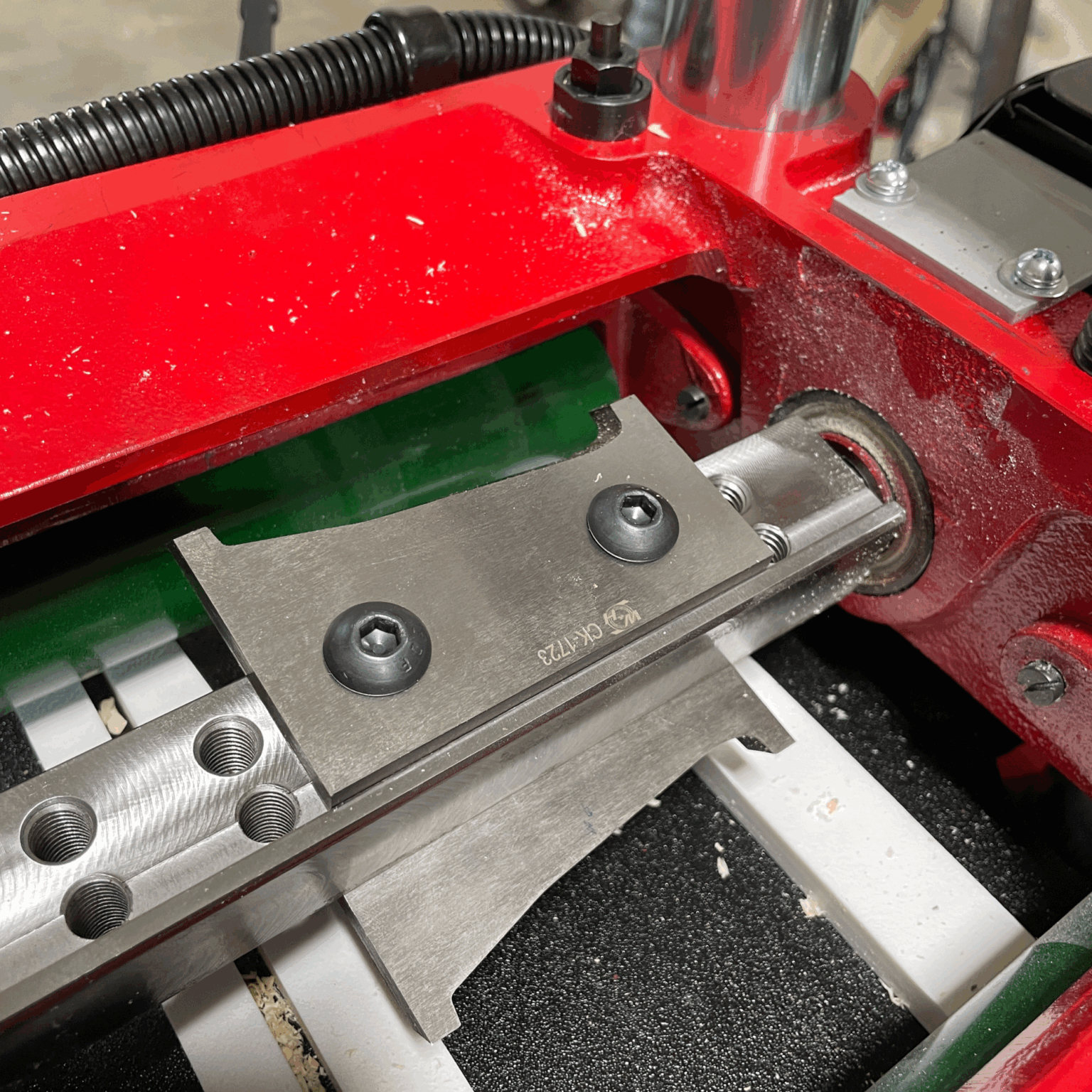
Begin by attaching the knives to the knife arbor. Position panel knives toward the far right, place smaller knives near the post-side mounting area, and center larger knives to maximize roller surface contact. This arrangement helps maintain balance and even pressure during operation.
Watch: How to Attach a Genuine Profile Knife to a Molder
Proper knife installation ensures balance, alignment, and safe operation. Watch the video below for a step-by-step demonstration of how to correctly attach a genuine Williams & Hussey profile knife to your molder.
Align the Knife to the Material
Roll one knife down so it points toward the molder bed. Place a sample piece of your stock on the bed, align it with the knife profile, and lower the machine head until the roller firmly secures the stock. This step ensures the knife is aligned correctly with the material.
Verify Alignment Before Running Material
Double-check knife alignment before running material. Even slight misalignment can lead to chatter, uneven profiles, or finish defects.
Set the Feed Rate and Monitor Operation
Adjust the feed rate based on wood species and profile complexity. Hardwoods and detailed profiles often require slower feed rates for optimal results. During operation, monitor for excessive vibration, which may indicate alignment, balance, or feed-pressure issues that should be addressed immediately.
Preparing the Wood
Quality molding starts with quality material. Use straight, stable boards free from major knots, warping, or defects. Grain direction also plays an important role—consistent grain helps reduce tear-out and improves surface finish.
If needed, run boards through a planer before molding to ensure flat, even surfaces. Proper material preparation allows the knife to make uniform contact with the wood and reduces the likelihood of chatter or gouging.
For long or continuous runs, edge-gluing boards can help maintain consistent appearance and dimensions throughout the project.
Feeding the Wood
Feeding technique directly affects molding quality. Feed stock at a steady, consistent pace, avoiding sudden starts or stops. Smooth feeding ensures uniform contact between the knife and the material throughout the cut.
Always use push sticks or appropriate safety tools to keep hands clear of the cutterhead. Inspect feed rollers regularly and keep them clean to ensure smooth, reliable material movement through the machine.
Inspecting the Finished Molding
After each run, inspect the finished molding for signs of tear-out, rough edges, chatter marks, or profile variation. If issues appear, revisit your setup—small adjustments to knife alignment, feed rate, or material preparation often resolve the problem.
Consistent inspection helps reduce waste, minimize sanding and rework, and ensure professional-quality results on every piece.
Ready to take your molding work to the next level?
With the right setup, proper material preparation, and quality tooling, running a molder becomes a reliable and repeatable process, even for beginners. Explore our full selection of standard and custom profile knives, molder accessories, and educational resources to get the most out of your Williams & Hussey machine.